
Air fryer acorn squash turns into something special fast: tender rings with caramelized edges, a glossy brown sugar glaze, and just enough cinnamon to make the whole kitchen smell warm and inviting. The air fryer does what the oven usually takes longer to do — it drives off moisture quickly, so the squash softens inside while the outside picks up those deep amber spots that taste almost candy-like.
The trick is keeping the rings in a single layer and giving them enough fat to help the sugar brown instead of burn. Melted butter coats the squash evenly, brown sugar melts into the surface, and cinnamon adds depth without taking over. A little salt matters here too, because it keeps the squash from tasting flat.
Below, you’ll find the timing that gets the centers fork-tender without turning the edges leathery, plus a couple of simple ways to adjust the seasoning if you want it less sweet or a little more savory.
The squash got caramelized on the edges and stayed tender in the middle, and the brown sugar butter pooled in the rings just enough without making them soggy. I checked them at 15 minutes and they were perfect.
Save this air fryer acorn squash for a caramelized side dish with crisp edges and a tender center.
The Reason This Squash Gets Brown Instead of Limp
Acorn squash can go soft and watery in a hurry if it’s crowded or under-seasoned. The air fryer fixes that by pushing hot air across every surface, which helps the cut edges caramelize instead of sitting there steaming in their own moisture. What you’re looking for is a browned rim, a tender fork test, and a surface that looks glossy rather than wet.
The other common problem is sugar that burns before the squash is cooked through. That happens when the basket is too full or the heat is too aggressive for the thickness of the rings. Here, the butter helps shield the sugar, and flipping halfway gives both sides a chance to pick up color without scorching one face.
- Single layer matters — If the rings overlap, they trap steam. Give them space so the hot air can hit the cut sides and start the caramelization.
- Butter does more than add flavor — It helps the brown sugar cling to the squash and protects the surface from drying out before the center softens.
- Thickness changes the timing — Thicker rings need closer to 18 minutes; thinner slices can be done around 15. Check tenderness with a fork, not the clock alone.
What the Butter, Sugar, and Cinnamon Are Each Doing Here
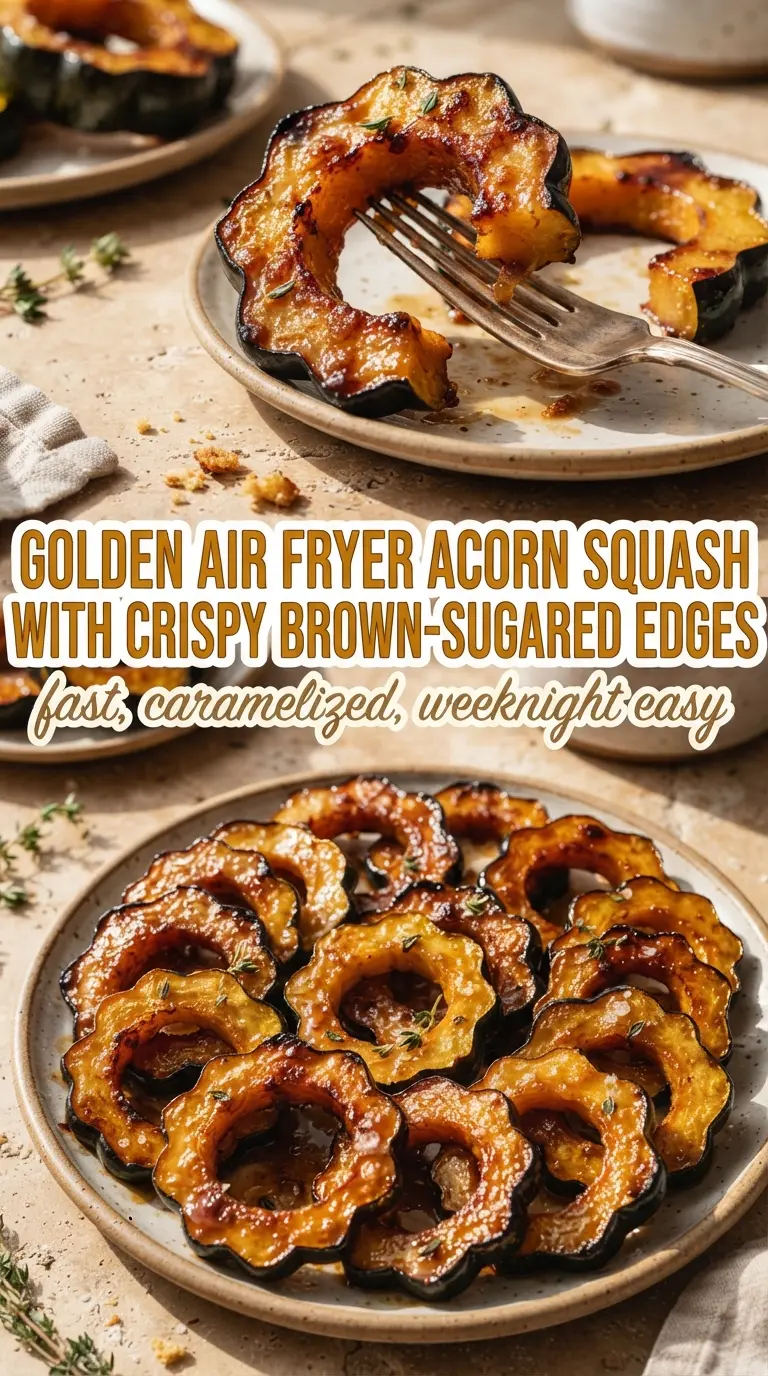
Butter is the backbone of the glaze. It carries the sugar, keeps the surface from drying out too quickly, and gives the edges that browned, almost toffee-like finish. If you swap in oil, the squash will still cook, but it won’t taste as rich or pick up the same kind of color.
Brown sugar melts into the squash as it cooks, which is why this tastes deeper than a plain roasted squash. Granulated sugar can work in a pinch, but it won’t give you the same molasses note or the slightly sticky coating that clings to the rings. Cinnamon should stay in the background; it’s there to round out the sweetness, not turn the squash into dessert.
Salt is the quiet ingredient that keeps the whole thing from tasting one-note. A pinch is enough to sharpen the squash and make the glaze taste more complete. If your squash is especially large or mild, a little extra salt at the end can wake it up.
Getting the Rings Tender Without Burning the Glaze
Coating the Squash Evenly
Stir the squash rings with the melted butter, brown sugar, cinnamon, and salt until every cut edge looks lightly glossy. If the sugar sits in dry patches, it tends to scorch in spots before the rest of the squash softens. A thin, even coating gives you better browning and a cleaner glaze.
Arranging for Airflow
Lay the rings in a single layer in the air fryer basket. Leave space between them if you can, because crowded squash steams and turns soft before it gets any color. If you need to cook a bigger batch, work in rounds instead of piling them up.
Flipping at the Right Moment
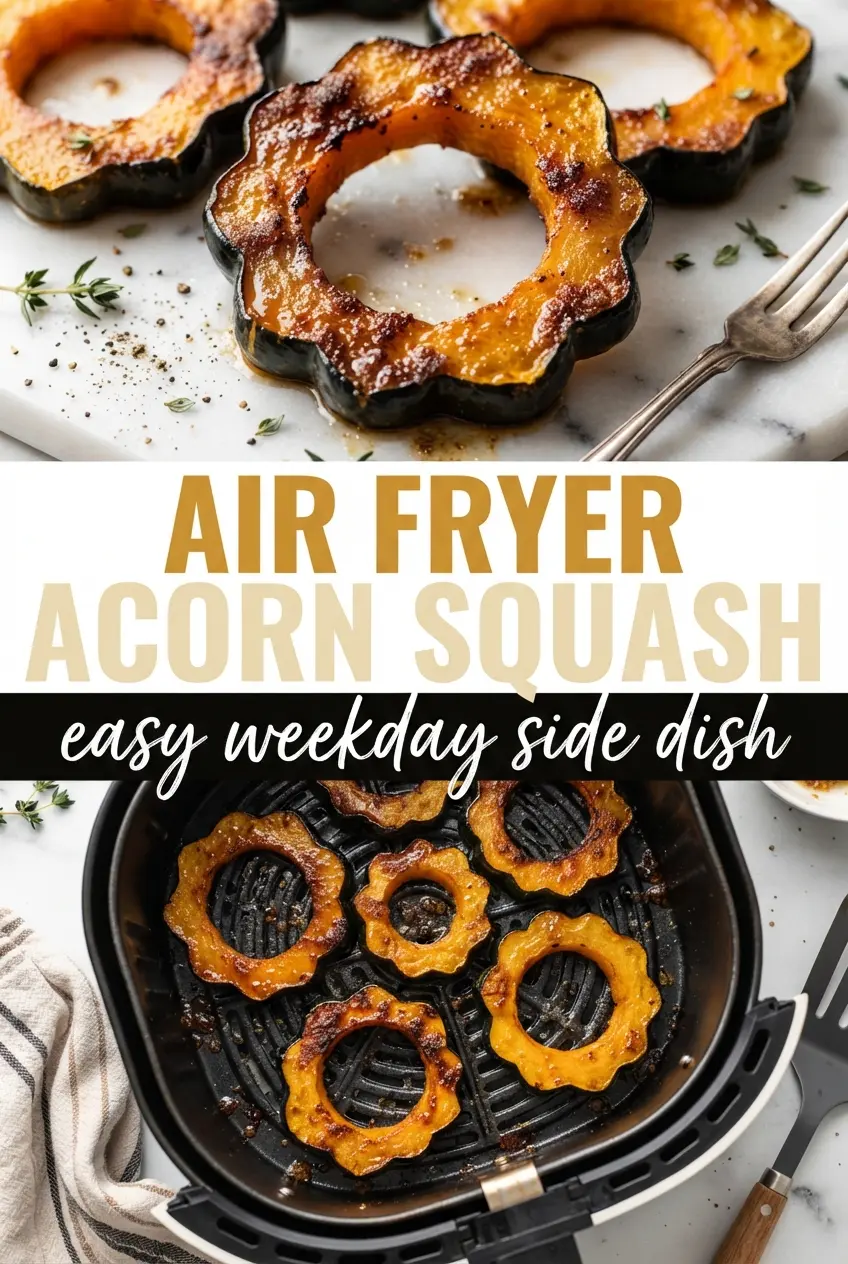
Air fry at 375°F and flip the rings halfway through. That flip matters because the underside usually browns faster where it contacts the basket, while the top needs a little more exposure to catch up. Pull the squash when a fork slides in easily and the edges look caramelized and slightly crackly.
Finishing Warm
Serve the squash as soon as it comes out, while the glaze is still glossy and the edges are crisp-looking. If it sits too long, the sugar softens and the surface loses that fresh-from-the-basket texture. A quick rest of a minute or two is fine; much longer and you start giving up the best part.
Three Useful Ways to Adjust This for Your Table
Dairy-Free Version
Swap the butter for melted olive oil or avocado oil. You’ll lose the buttery sweetness, but the squash still caramelizes well because the sugar and hot air do most of the work. Add a tiny pinch more salt to keep the flavor balanced.
Less-Sweet, More-Savory Squash
Cut the brown sugar in half and add black pepper or a pinch of smoked paprika. The squash will still brown, but the finish shifts toward a savory side dish instead of a candied one. This works well next to roasted chicken, pork, or a grain bowl.
Maple Glazed Swap
Replace the brown sugar with a small drizzle of maple syrup and reduce the butter slightly so the glaze doesn’t get too loose. Maple gives a deeper, woodsy sweetness, but it browns a little faster, so check the squash a minute early.
Storage and Reheating
- Refrigerator: Store in an airtight container for up to 4 days. The glaze softens as it sits, but the flavor holds up well.
- Freezer: It can be frozen, but the texture turns softer after thawing. If you do freeze it, lay the rings in a single layer first, then transfer them to a container once solid.
- Reheating: Warm in the air fryer at 350°F for a few minutes until heated through. The biggest mistake is microwaving too long, which makes the squash watery and flattens the caramelized edges.
Answers to the Questions Worth Asking
Air Fryer Acorn Squash
Ingredients
Equipment
Method
- Toss the acorn squash rings with melted butter, brown sugar, cinnamon, and salt until evenly coated and glossy.
- Heat the air fryer to 375°F while the squash is coated so it starts crisping right away.
- Arrange the squash rings in a single layer in the air fryer basket with space between pieces to prevent steaming.
- Air fry at 375°F for 15-18 minutes, flipping halfway, until caramelized and tender with a deep amber color and slightly crackly edges.
- Serve the air fryer acorn squash warm right after cooking.