
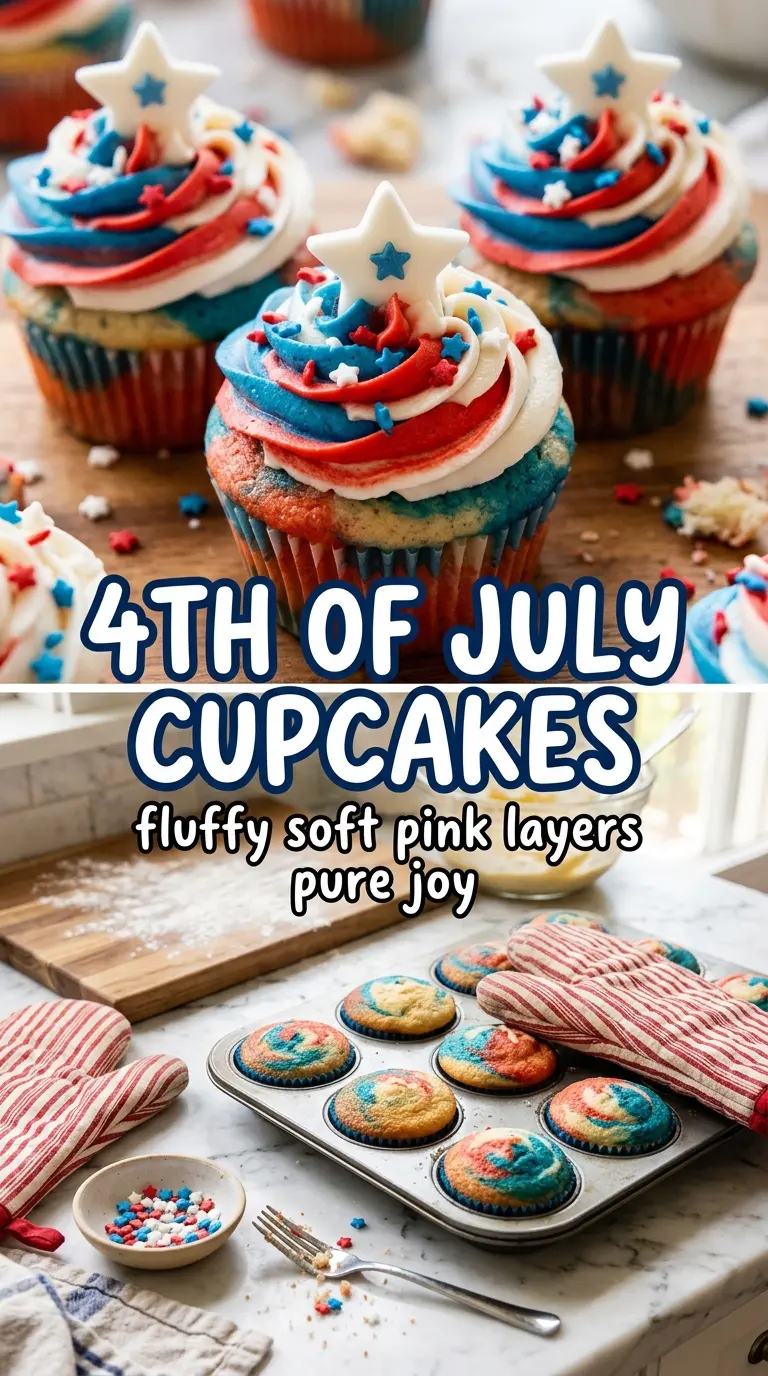
Fluffy vanilla cupcakes with a tall swirl of frosting disappear fast because they stay light, tender, and festive without turning greasy or heavy. The crumb is soft but not fragile, the buttercream pipes cleanly, and the color contrast makes the whole tray look finished before you’ve even added the sprinkles. That’s the kind of dessert that earns a repeat spot because it tastes as good as it looks.
The trick is in keeping the cake base simple and the frosting stable. A vanilla cupcake batter with the right amount of fat bakes up with a fine crumb, while a buttercream that’s beaten long enough becomes smooth enough to hold its shape in warm weather. If the frosting seems loose, it usually needs a little more powdered sugar or a few minutes in the fridge, not more mixing.
Below, I’ve added the details that matter most: how to keep the cupcakes from baking up dry, how to get that bakery-style frosting swirl, and a few variations if you want to shift the flavor or color without losing the celebratory look.
The cupcakes baked up evenly and stayed so soft the next day, and the buttercream held its shape even after sitting out for the party table.
Like these 4th of July cupcakes? Save them to Pinterest for the celebrations when you want a soft vanilla base and a frosting swirl that actually holds up.
Why These Cupcakes Stay Tender Instead of Dry
Most cupcakes go wrong before they ever hit the oven. The batter gets overmixed, the flour gets packed too tightly, or the cupcakes bake a few minutes too long because the tops still look pale when the centers are already set. By the time they cool, the crumb feels tight and a little stale instead of soft and airy.
This version stays tender because the batter is mixed just until the dry bits disappear, then baked until the centers spring back lightly when touched. That sounds minor, but it’s the difference between a cupcake that slices cleanly and one that feels bready. The other big win is the frosting: a stable buttercream gives you height and definition, so the decorations don’t collapse into a greasy puddle.
If your cupcakes dome too sharply, the oven is probably running hot. If they sink, they were pulled too early or the batter was overworked. Watch the texture at the top, not the clock alone.
What Each Ingredient Is Actually Doing in These Cupcakes
- Cake flour or all-purpose flour — Cake flour gives the softest, most delicate crumb. All-purpose still works if that’s what you have, but the cupcakes will be a touch sturdier. If you use all-purpose, don’t add extra flour to the scoop.
- Butter — Butter brings flavor and structure to both the cake and frosting. For the frosting, use it at cool room temperature so it beats smooth instead of greasy. If it’s too soft, the swirl won’t hold.
- Granulated sugar — Sugar does more than sweeten here; it helps trap air when creamed with butter, which gives the cupcakes lift. Don’t reduce it much or the texture gets dense and the crumb dries out faster.
- Buttermilk or milk with lemon juice — The slight tang balances the sweetness and keeps the cupcake tasting light. If you don’t have buttermilk, stir 1 tablespoon lemon juice or vinegar into 1 cup milk and let it sit for 5 minutes before using.
- Powdered sugar — This is what gives the buttercream its body. Sift it if yours is lumpy, especially if you want a smooth swirl with no little sugar pockets.
- Gel food coloring — Gel color gives you a bright red, blue, or pink without thinning the frosting. Liquid coloring can loosen the buttercream and make it harder to pipe.
Getting the Batter and Frosting to Behave
Mix the Base Until It Just Comes Together
Cream the butter and sugar until the mixture looks pale and fluffy, not greasy and soupy. That step builds the air that helps the cupcakes rise without turning dense. Add the eggs one at a time so the batter stays smooth; if it looks a little curdled after the second egg, it usually comes back together once the flour goes in.
Stop as Soon as the Flour Disappears
Once the dry ingredients are added, mix only until no streaks of flour remain. Overmixing develops gluten and gives you a firmer, tougher cupcake. The batter should look thick and smooth, not elastic.
Pipe the Frosting When It’s Cool, Not Warm
Beat the buttercream until it looks satiny and holds peaks. If the room is warm or the frosting starts to slump, chill it for 10 minutes, then stir again. Pipe onto fully cooled cupcakes only, or the swirl will slide and melt at the edges before the tray even reaches the table.
How to Change These Without Losing the Party Look
Make Them Gluten-Free Without a Gummy Texture
Use a good 1:1 gluten-free baking blend that already includes xanthan gum. The cupcakes will be a little more delicate, but the crumb should still be soft and close to the original if you don’t overmix the batter.
Dairy-Free Cupcakes That Still Taste Rich
Swap the butter for a dairy-free baking stick and use unsweetened plant milk with a little lemon juice for the liquid. The cake stays soft, though the frosting may need an extra spoonful of powdered sugar to keep its shape.
Blue, Red, or Red-White-and-Blue Swirls
Tint separate bowls of frosting with gel color, then pipe them side by side into the same bag for a striped effect. The color stays bold without watering down the buttercream, and the swirl looks cleaner than mixing the shades together.
Storage and Reheating
- Refrigerator: Store frosted cupcakes in an airtight container for up to 3 days. The cake stays moist, but the buttercream firms up in the fridge.
- Freezer: Freeze unfrosted cupcakes for up to 2 months. Wrap them individually, then thaw at room temperature before frosting for the best texture.
- Reheating: Cupcakes don’t need reheating. If you’ve chilled them, let them sit out for 30 to 45 minutes so the frosting softens and the cake loses that cold, firm bite.
Answers to the Questions Worth Asking
4Th Of July Cupcakes
Ingredients
Equipment
Method
- Preheat the oven to 350°F and line a 12-cup muffin tin with paper liners, so the cupcakes bake evenly from the start.
- Whisk together all-purpose flour, baking powder, baking soda, and salt in a bowl until no lumps remain, then set aside.
- Beat softened butter and granulated sugar with a stand mixer on medium speed until light and fluffy, about 2-3 minutes, then scrape the bowl.
- Add eggs one at a time, mixing well after each addition, then mix in vanilla extract.
- Add dry ingredients alternately with milk and yogurt, mixing on low just until the batter looks smooth and thick.
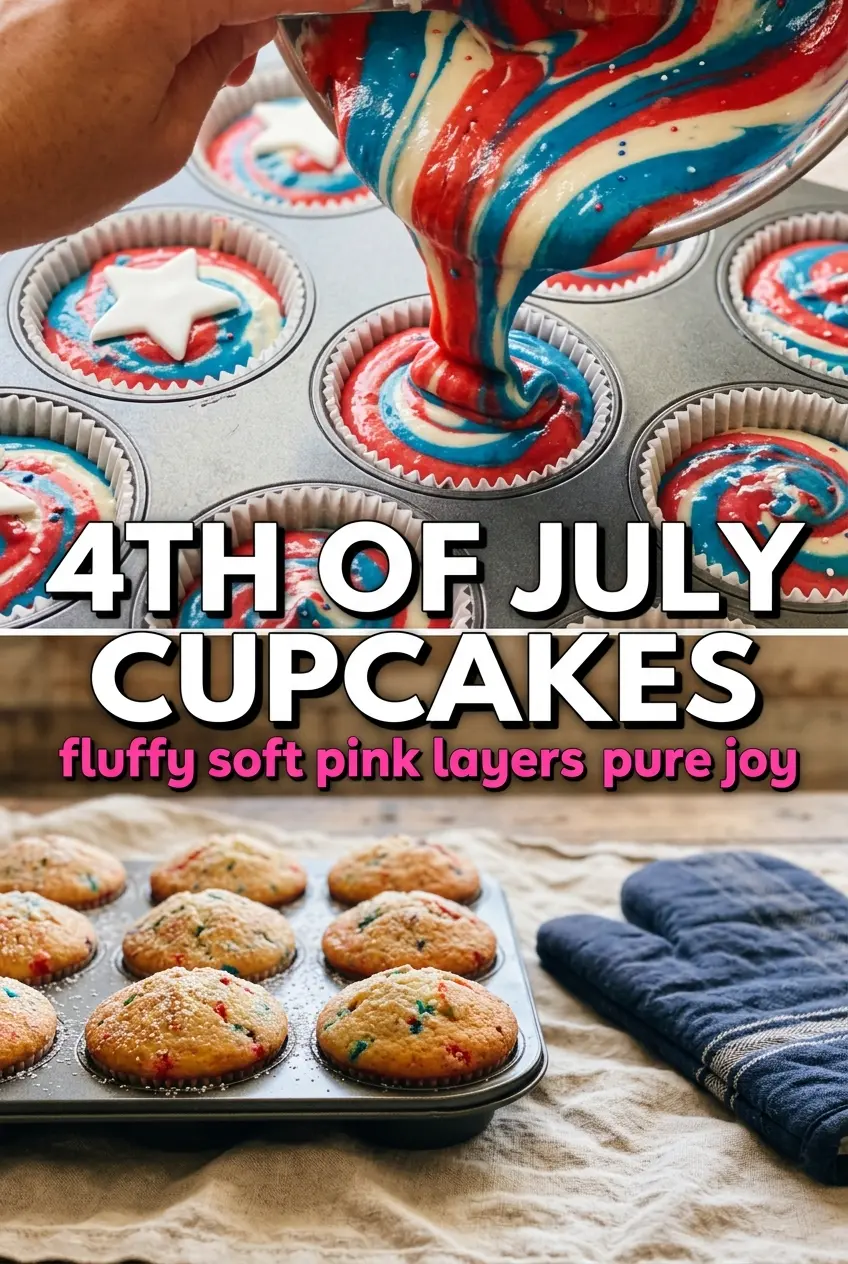
- Fill each liner about 2/3 full with batter for consistent rise and bake time.
- Bake at 350°F for 25-35 minutes, until the tops spring back and a toothpick inserted in the center comes out clean.
- Cool cupcakes in the pan for 5 minutes, then transfer to a rack to cool completely before frosting (about 20 minutes visible cooling).
- Beat softened butter in a stand mixer until creamy, about 1-2 minutes, then slowly add powdered sugar on low to prevent clouds of sugar.
- Increase speed to medium and mix until smooth, then add heavy cream, vanilla extract, and salt to adjust texture.
- Mix in pink food coloring a little at a time until the frosting turns a vibrant pink, then fold in lemon zest and lemon juice for a bright tang.
- Pipe a swirl onto cooled cupcakes, holding the piping tip steady to keep the swirl shape in warm conditions (frosting should look smooth and satiny).
- Serve immediately, or refrigerate only until set, keeping the frosting from softening (visible: frosting holds its peaks).