
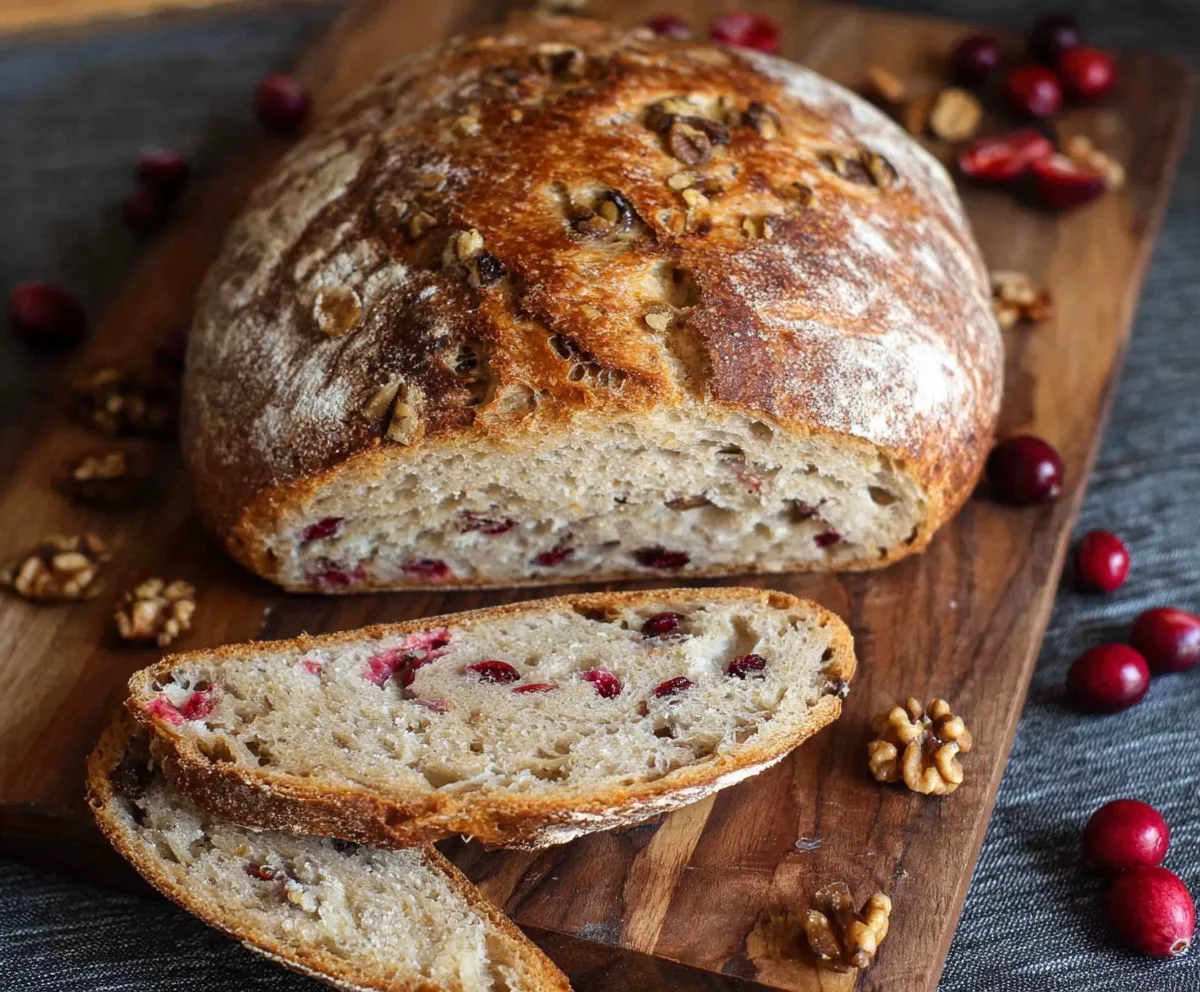
Sourdough cranberry walnut bread is a delightful treat that perfectly balances tangy sourdough flavor with the sweet bursts of cranberries and the crunchy texture of walnuts. This bread has a nice chewy crust and a soft, aromatic crumb filled with little pockets of fruity and nutty goodness.
I love making this bread when the seasons start to change because it feels like a little celebration in every slice. The natural sourdough tang cuts through the sweetness of the cranberries just right, and the walnuts add a satisfying crunch that keeps every bite interesting. It’s one of those breads I find myself reaching for again and again.
My favorite way to enjoy this loaf is toasted with a bit of butter or cream cheese – it really brings out the flavors and makes for a simple yet special snack or breakfast. It also pairs wonderfully with warm drinks like tea or coffee, making it a cozy choice whether you’re sharing it with friends or savoring a quiet moment alone.
Key Ingredients & Substitutions
Bread flour: This flour has a higher protein content that helps build strong gluten, giving the bread a chewy texture. If you can’t find bread flour, all-purpose flour works but expect a softer crumb.
Sourdough starter: This brings natural fermentation and a tangy flavor. If you don’t have one, you can use commercial yeast, but the taste won’t be the same.
Dried cranberries: They add a sweet-tart pop that contrasts beautifully with the sourdough. If you want a different fruit, dried cherries or raisins are great alternatives.
Walnuts: These give the bread a lovely crunch and nutty flavor. Pecans or almonds can be swapped in if needed.
How Do I Get the Dough Just Right for Adding Nuts and Fruit?
It’s best to add cranberries and walnuts after the initial stages of fermentation, ideally after your final stretch-and-fold. This way, the dough has developed enough gluten to hold its structure but isn’t too tight to avoid crushing the fruit.
- Gently knead the fruit and nuts in by hand.
- Try not to overwork the dough—fold them in carefully until evenly spread.
- If the dough feels sticky, use lightly floured hands.
This approach keeps the add-ins intact and well distributed without harming the dough’s rise and texture.
Equipment You’ll Need
- Large mixing bowl – I use this to combine ingredients and let the dough rise, giving me plenty of room to work.
- Dough scraper or spatula – helps fold the dough smoothly and prevents sticking.
- Banneton or proofing basket – helps shape the loaf and maintain structure during proofing for a nice crust.
- Kitchen towel or plastic wrap – covers the dough to keep it moist during fermentation.
- Preheated Dutch oven or baking stone – creates a hot environment for that crusty outside and tender inside.
- Sharp knife or razor blade – scores the dough for controlled expansion during baking.
Flavor Variations & Add-Ins
- Swap cranberries for dried cherries or raisins for different fruit flavors.
- Add chopped almonds or pecans instead of walnuts for a different nutty crunch.
- Mix in orange or lemon zest for a bright citrus twist that pairs well with the fruit.
- Use honey or maple syrup in place of some water for a touch of extra sweetness.
How to Make Sourdough Cranberry Walnut Bread?
Ingredients You’ll Need:
- 500g bread flour (about 4 cups)
- 350g water (about 1 1/2 cups), room temperature
- 100g active sourdough starter (about 1/2 cup), fed and bubbly
- 10g salt (about 1 1/2 tsp)
- 150g dried cranberries (about 1 cup)
- 120g walnuts, coarsely chopped (about 1 cup)
- Optional: extra flour for dusting
How Much Time Will You Need?
This bread takes about 45 minutes of active preparation time spread throughout the process, plus about 3 to 4 hours for the main fermentation, then an additional 2 to 3 hours for proofing (or overnight if proofing in the fridge). Baking takes around 40 to 45 minutes. It’s best to plan ahead to let the dough rest and develop flavor.
Step-by-Step Instructions:
1. Prepare the Dough:
In a large bowl, mix the bread flour and water until just combined and the dough looks shaggy. Cover it and let it rest for 30 to 45 minutes. This resting period helps the flour absorb the water, making the dough easier to work with.
2. Add Starter and Salt:
Mix the active sourdough starter and salt into the dough by hand or with a dough scraper. Stir well until everything is fully blended.
3. Bulk Fermentation and Stretch & Folds:
Cover the dough and let it sit at room temperature for 3 to 4 hours. During the first 2 hours, every 30 minutes, perform a gentle stretch and fold: reach under the dough, stretch it upward, then fold it over itself. This strengthens the dough’s gluten network.
4. Add Cranberries and Walnuts:
After your final stretch and fold, gently knead in the dried cranberries and chopped walnuts. Be careful to mix them evenly without squashing the fruit.
5. Shape the Dough:
Turn the dough out onto a lightly floured surface. Shape it into a round or oval loaf by folding the edges inward, then tighten the surface by gently pulling the dough toward you while rotating it.
6. Proof:
Place your shaped loaf seam-side up into a floured banneton or a bowl lined with a floured towel. Cover it and let it proof for 2 to 3 hours at room temperature. For extra flavor and convenience, you can also proof it overnight in the fridge.
7. Preheat Oven and Baking Vessel:
Preheat your oven to 230°C (450°F) at least 30 minutes before baking. Heat a Dutch oven or baking stone inside to ensure a crispy crust.
8. Score and Bake:
Carefully transfer the dough onto a piece of parchment paper. Using a sharp knife or razor blade, score the top of the loaf to help it expand during baking. Place it (with parchment) inside the preheated Dutch oven, cover with the lid, and bake for 20 minutes.
9. Finish Baking:
Remove the lid and bake for another 20 to 25 minutes until the crust is deeply golden and crispy.
10. Cool:
Transfer the bread to a wire rack and allow it to cool completely before slicing. This helps set the crumb and enhances flavor.
Enjoy your fresh sourdough cranberry walnut bread as is or toasted with your favorite spread! It’s perfect for breakfast, snacks, or even alongside a hearty soup or cheese board.
Can I Use Frozen Cranberries or Walnuts?
Yes! If using frozen, make sure to thaw them fully and pat dry before adding to the dough. This prevents extra moisture from affecting the bread’s texture.
Can I Freeze This Bread?
Absolutely! Once cooled, wrap the loaf tightly in plastic wrap and then foil or a freezer bag. Freeze for up to 3 months. To enjoy, thaw at room temperature and refresh in the oven if desired.
How Do I Know When the Dough Is Properly Proofed?
The dough should puff up noticeably and feel slightly jiggly or airy when gently pressed. If it springs back quickly, it needs more time. Over-proofed dough may collapse, so watch carefully during the final rise.
Can I Substitute Nuts or Fruit?
Yes! Pecans, almonds, or hazelnuts work well instead of walnuts. For fruit, try dried cherries, raisins, or apricots for a different but delicious flavor profile.