
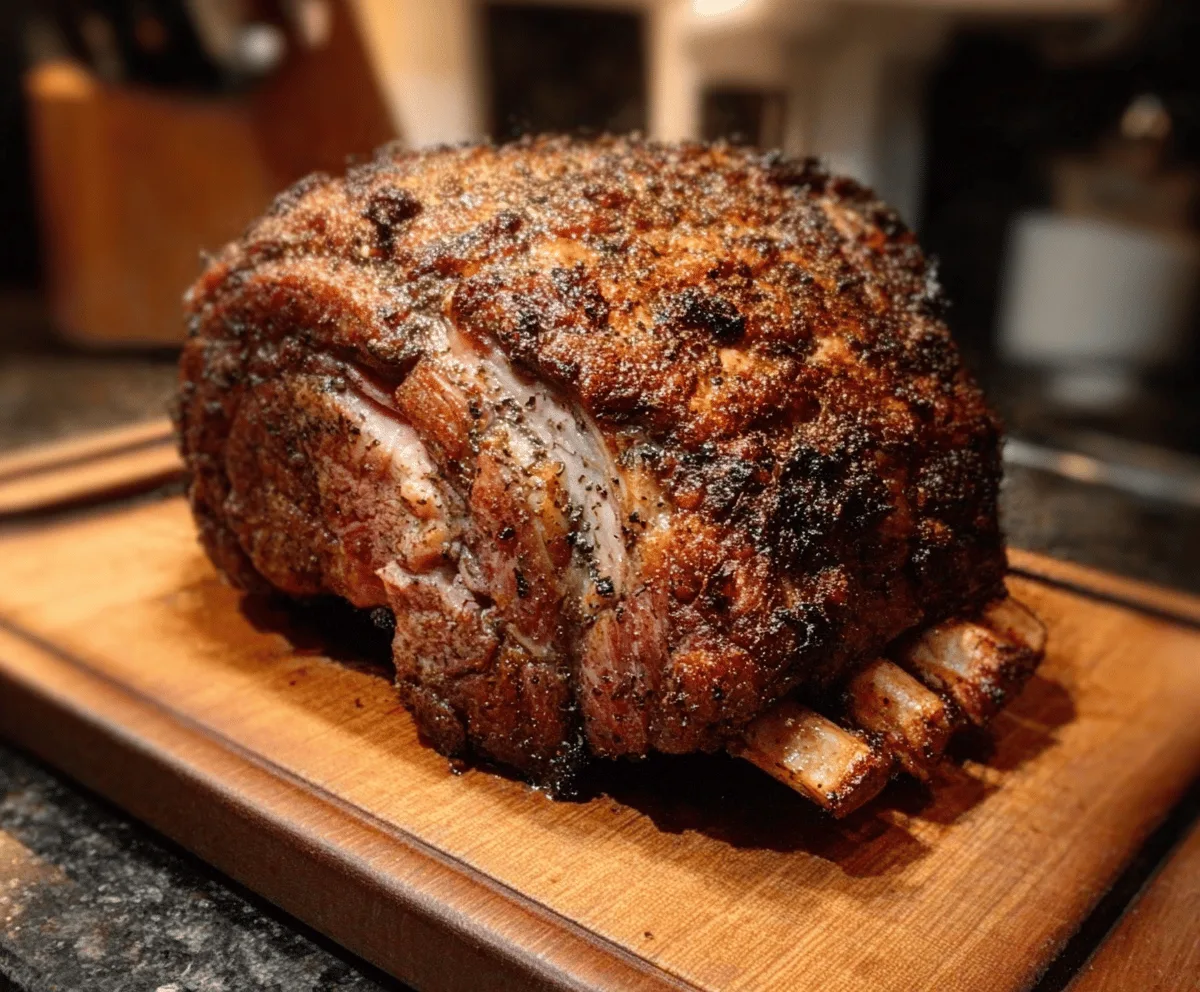
Roasted Bone-In Prime Rib is a classic holiday centerpiece that’s rich, juicy, and full of bold beefy flavor. The bone helps keep the meat tender and adds an amazing depth of taste as it slow-cooks, while the outside gets that perfect crusty crust. There’s something really special about roasting a big cut like this—it’s a dish that says celebration and good times.
I love the way the smell fills the house while it’s roasting—it’s like an instant marker of something special happening. One little trick I always use is letting the meat rest after roasting so the juices settle in; it makes every bite extra moist and tender. I find that seasoning it simply with salt, pepper, and maybe some garlic really lets the beautiful beef shine.
Serving this prime rib with some creamy horseradish sauce or a simple au jus makes it even better. I like to pair it with roasted veggies or mashed potatoes to soak up all those delicious juices. This is the kind of meal that brings everyone together—you’re guaranteed to get smiles and second helpings around the table whenever you make it.
Key Ingredients & Substitutions
Bone-In Prime Rib: This cut is prized for its tenderness and flavor due to the bone. If you can’t find bone-in, boneless rib roast works, but the flavor and moisture might be slightly less rich.
Garlic: Fresh minced garlic provides great aroma and depth. If you’re short on time, garlic powder is a simple substitute. It won’t be as vibrant but still adds nice flavor.
Fresh Herbs (Rosemary & Thyme): These herbs bring earthiness and pair beautifully with beef. If fresh isn’t available, dried herbs work too—use about a third of the amount since dried are stronger.
Kosher Salt & Black Pepper: Essential for seasoning and crust formation. Use coarse salt for the best crust. If kosher salt isn’t on hand, sea salt is a good alternative.
How Do You Get a Perfect Crust on Prime Rib?
Building a flavorful crust is key for prime rib. Start by patting the meat very dry so the seasoning sticks well. Then, after applying the rub, roast at a high temperature (450°F) for about 15 minutes. This initial hot blast helps create that crusty exterior.
- Use a roasting rack so heat circulates evenly around the meat.
- A high oven temp at the start sears the surface, locking in juices.
- Don’t skip the resting period after cooking; it lets juices redistribute for juicy slices.
- A meat thermometer is your best tool to nail the perfect doneness without guessing.
Equipment You’ll Need
- Roasting pan with a rack – I recommend this so the heat circulates evenly and the meat cooks uniformly.
- Meat thermometer – Using a good thermometer makes it easier to hit the perfect doneness.
- Kitchen twine (optional) – Helps keep the roast in a uniform shape if needed for even cooking.
- Chef’s knife – For slicing the roast cleanly and against the grain.
- Aluminum foil – To tent the meat as it rests, keeping it warm and juicy.
Flavor Variations & Add-Ins
- Use crushed black peppercorns with the salt rub for a spicy crust, perfect if you love a peppery kick.
- Add a touch of Dijon mustard to the seasoning rub for a tangy layer of flavor.
- Incorporate dried herbs like thyme or oregano into the rub if fresh aren’t available or for a different herbal note.
- Serve with a balsamic glaze or red wine reduction drizzled over slices for extra richness and acidity.
How to Make Roasted Bone-In Prime Rib
Ingredients You’ll Need:
- 1 (5-6 pound) bone-in prime rib roast
- 2 tbsp olive oil
- 4 cloves garlic, minced
- 2 tbsp kosher salt
- 1 tbsp freshly ground black pepper
- 1 tbsp fresh rosemary, finely chopped
- 1 tbsp fresh thyme leaves, finely chopped
- 1 tsp onion powder
- Fresh rosemary sprigs, for garnish
- Horseradish sauce or au jus, for serving (optional)
How Much Time Will You Need?
This recipe takes about 1 hour to prepare, plus 1.5 to 2 hours to roast depending on your desired doneness. After roasting, allow 20-30 minutes for resting so the juices settle and your meat stays tender and juicy. All in all, you’re looking at around 3 hours from start to finish.
Step-by-Step Instructions:
1. Let the Meat Sit at Room Temperature:
Take the prime rib out of the fridge and let it rest on the counter for about an hour. This helps it cook evenly inside and out.
2. Prepare Your Oven and Seasoning:
Preheat your oven to 450°F (230°C). While it heats, mix the olive oil, minced garlic, kosher salt, black pepper, rosemary, thyme, and onion powder in a small bowl to make your seasoning rub.
3. Season the Roast:
Use paper towels to pat the prime rib dry. Rub the seasoning mixture all over the roast, covering every bit well—including the bone sides.
4. Roast at High Temperature to Form a Crust:
Place the roast bone-side down on a rack inside a roasting pan. Insert a meat thermometer into the thickest part of the meat, being careful to avoid touching the bone. Roast in the oven at 450°F for 15 minutes. This step creates a delicious crust.
5. Roast at Lower Temperature Until Done:
Lower the oven temperature to 325°F (165°C). Continue roasting until the thermometer reads your preferred doneness:
- Rare: 120°F (49°C)
- Medium rare: 130°F (54°C)
- Medium: 140°F (60°C)
This usually takes between 1.5 to 2 hours, depending on your roast and oven.
6. Rest the Meat:
Take the roast out and loosely cover it with aluminum foil. Let it rest for 20 to 30 minutes. Resting allows the juices to redistribute, making the meat extra juicy and tender.
7. Slice and Serve:
Slice against the grain for the best texture. Arrange slices on a platter, garnish with fresh rosemary sprigs, and serve alongside horseradish sauce or au jus if you like. Roasted vegetables or mashed potatoes make fantastic sides.
Enjoy your beautifully roasted, tender, and flavorful prime rib!
Can I Use Frozen Prime Rib for This Recipe?
It’s best to use fresh or fully thawed prime rib. If using frozen, thaw it completely in the refrigerator for 2-3 days before cooking to ensure even roasting and safe internal temperatures.
How Should I Store Leftover Prime Rib?
Store leftovers in an airtight container in the refrigerator for up to 3-4 days. To reheat, warm gently in the oven or microwave to keep it tender without drying out.
Can I Cook the Prime Rib Ahead of Time?
Yes! You can roast the prime rib a few hours ahead and keep it wrapped in foil, then gently reheat before serving. Resting the meat is key, so slice after reheating for best texture.
What’s the Best Way to Check for Doneness?
Use an instant-read meat thermometer inserted into the thickest part of the roast (avoiding the bone). This ensures accurate cooking and helps prevent overcooking.