
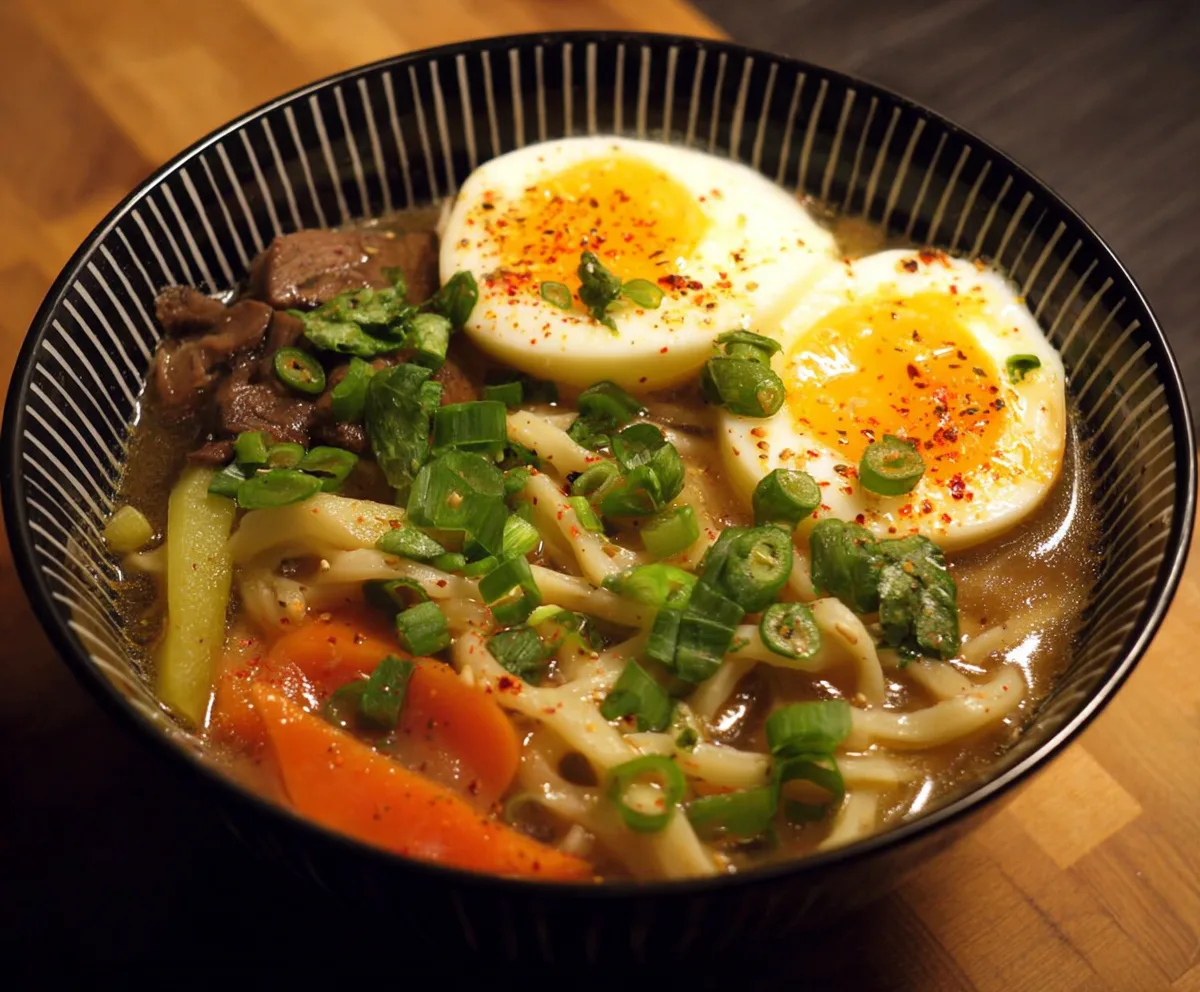
Miso Ramen with Soft Boiled Egg is a comforting bowl of goodness filled with rich, flavorful broth, tender noodles, and a perfectly soft boiled egg that adds a lovely creaminess. The miso base gives the soup a warm, slightly salty taste that feels just right on chilly days or whenever you need a little extra warmth in your belly.
I always enjoy making this ramen when I want something satisfying but not too heavy. The soft boiled egg is my favorite part—the yolk is just gooey enough to mix into the broth and make every spoonful smooth and delicious. A tip I like to share is to use fresh green onions and a little sesame oil to brighten the flavors and give it that extra something special.
One of my favorite ways to eat this ramen is with some crunchy vegetables on top, like crunchy bean sprouts or cabbage, and a sprinkle of toasted sesame seeds. It’s a simple meal that feels cozy and homemade, and it never fails to lift my spirits. I find it’s perfect for a quiet night in or when I’m craving a little taste of Japanese comfort food.
Key Ingredients & Substitutions
Miso Paste: This is the heart of your broth, giving it that deep, umami flavor. White miso is milder and sweeter, while red miso is richer and saltier. If you’re out of miso, you can try a mix of tahini and soy sauce for a different but tasty twist.
Soft Boiled Eggs: These add creaminess and richness to your ramen. Fresh eggs work best to make peeling easier. If you’re short on time, you can use store-bought marinated eggs (ajitsuke tamago) from Asian markets.
Shiitake Mushrooms: They bring a meaty texture and earthiness. If you can’t find shiitake, cremini or portobello mushrooms are good substitutes. Dry shiitake also works—just soak before cooking.
Ramen Noodles: Fresh noodles give the best texture, but dried or instant ramen noodles also work great. If you’re gluten-free, try rice noodles or shirataki noodles for a lighter option.
How Do You Make the Perfect Soft Boiled Egg for Ramen?
Getting the yolk just right can be tricky, but it makes all the difference. Here’s what I do:
- Bring water to a boil and gently lower eggs in with a spoon to prevent cracking.
- Cook for exactly 7 minutes for slightly runny yolks. If you prefer more set yolks, add a minute or two.
- Immediately transfer eggs to an ice bath to stop cooking and make peeling easier.
- Peel gently under running water to help remove the shell cleanly without breaking the white.
Tip: Use eggs that are a few days old—they peel more easily than very fresh eggs.
Equipment You’ll Need
- Large pot – I use this to boil eggs and simmer the broth, making everything in one place.
- Skillet or frying pan – perfect for sautéing the mushrooms until crispy and flavorful.
- Strainer or colander – helps drain the noodles quickly without sticking.
- Kitchen tongs or slotted spoon – useful for gently handling the eggs and removing the hot water.
- Bowls for serving – a wide bowl helps keep all the toppings and broth together beautifully.
Flavor Variations & Add-Ins
- Swap shiitake mushrooms for shiitake, maitake, or even caramelized onions for different textures and flavors.
- Use pork belly slices, chicken, or tofu instead of eggs for added protein and richness.
- Add a dash of chili oil or hot sauce to make it spicy; great if you like a little kick.
- Stir in some bok choy, spinach, or kale for extra greens and nutrients.
Miso Ramen with Soft Boiled Egg
Ingredients You’ll Need:
- 4 cups chicken or vegetable broth
- 2 tablespoons white or red miso paste
- 1 tablespoon soy sauce
- 1 teaspoon sesame oil
- 2 servings ramen noodles (fresh or dried)
- 2 large eggs
- 4-6 large shiitake mushrooms, sliced
- 2 green onions, thinly sliced
- Fresh cilantro leaves
- 1 tablespoon vegetable oil (for mushrooms)
- Optional: pinch of chili powder or togarashi (Japanese chili seasoning) for garnish
How Much Time Will You Need?
This recipe takes about 20 minutes in total. You’ll spend time boiling the eggs, cooking the noodles and mushrooms, and simmering the flavorful miso broth. It’s a quick and satisfying meal you can prepare any day!
Step-by-Step Instructions:
1. Prepare the Soft Boiled Eggs:
Bring a pot of water to a boil. Gently add the eggs and cook them for exactly 7 minutes to get a firm white and slightly runny yolk. Once done, transfer the eggs immediately into an ice water bath to stop the cooking. After cooling, peel the eggs carefully and set aside.
2. Cook the Mushrooms:
Heat vegetable oil in a skillet over medium-high heat. Add the sliced shiitake mushrooms and sauté them until they turn golden brown and slightly crispy around the edges—about 5 to 7 minutes. Remove from heat and set aside.
3. Make the Broth:
In a pot, bring the chicken or vegetable broth to a gentle simmer. Whisk in the miso paste until fully dissolved. Then add soy sauce and sesame oil, stirring to combine everything well. Taste and adjust seasoning if needed.
4. Cook the Noodles:
In another pot, cook ramen noodles according to the package instructions until just tender. Drain the noodles and divide them evenly into your serving bowls.
5. Assemble the Ramen:
Ladle the hot miso broth over the noodles. Cut the soft boiled eggs in half and place them on one side of each bowl. Arrange the sautéed mushrooms on another side. Sprinkle the sliced green onions and fresh cilantro over the top for fresh flavor.
6. Garnish and Serve:
Optionally, sprinkle a pinch of chili powder or togarashi on the eggs for a gentle spicy kick. Serve your miso ramen immediately and enjoy stirring the soft yolk into the broth for an extra creamy and rich taste.
Can I Use Frozen Ramen Noodles?
Yes, frozen noodles work well! Just cook them according to package instructions and drain before adding to your bowl. If frozen, no need to thaw—just add them directly to boiling water.
How Should I Store Leftover Broth and Noodles?
Store broth and noodles separately in airtight containers in the fridge for up to 3 days. Reheat broth gently on the stove and warm noodles briefly in hot water before assembling your ramen again.
Can I Make This Recipe Vegetarian?
Absolutely! Use vegetable broth instead of chicken, and swap soy sauce for tamari if you want gluten-free. Load up on mushrooms and veggies for extra flavor and texture.
What’s the Best Way to Peel Soft Boiled Eggs?
Peel eggs under running cold water or in a bowl of water to make shell removal easier. Using eggs that are a few days old can help, as fresh eggs tend to be harder to peel cleanly.