
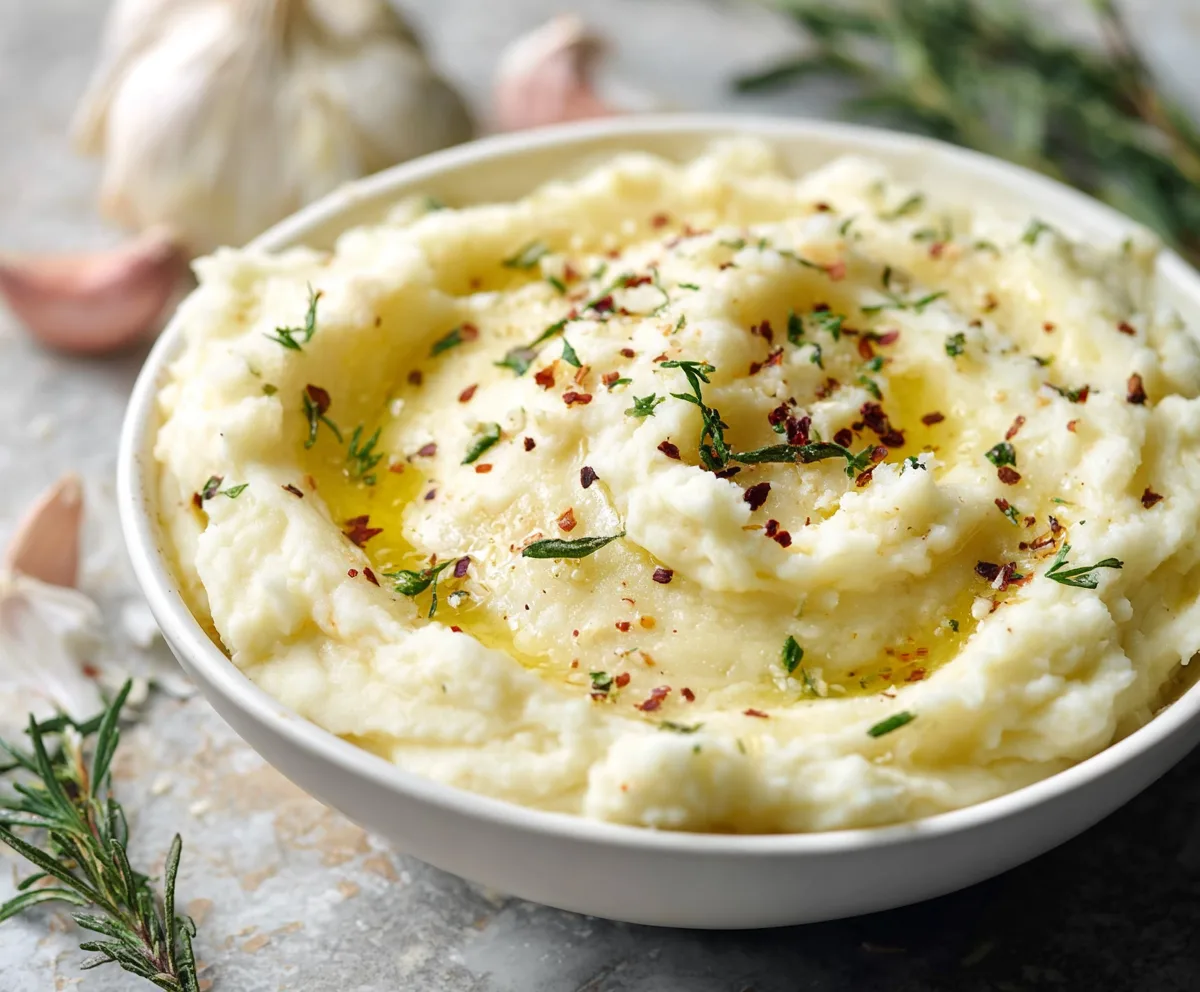
Garlic Parmesan Mashed Potatoes are a creamy, comforting side dish that brings together fluffy potatoes, roasted garlic, and a generous sprinkle of Parmesan cheese. The garlic adds a gentle kick while the Parmesan melts in for a rich, cheesy flavor that makes every bite something special. It’s the kind of dish that’s simple but feels like a little celebration on your plate.
I love making these mashed potatoes when I want something cozy but a bit different from the usual. The roasted garlic softens just enough to blend perfectly with the butter and cream, giving the potatoes a smooth texture with little bursts of flavor. I find myself sneaking spoonfuls as I’m stirring—there’s just something about that mix of garlicky and cheesy that’s impossible to resist.
My favorite way to serve Garlic Parmesan Mashed Potatoes is alongside a juicy roast chicken or a simple steak. It’s a crowd-pleaser every time, and I’ve noticed that friends tend to ask for seconds without even thinking twice. Honestly, they’re the perfect comfort food to have on hand for any night you want a little extra warmth and goodness on your plate.
Key Ingredients & Substitutions
Potatoes: Russet and Yukon Gold are great choices. Russets give fluffy mashed potatoes, while Yukon Golds are creamier. If you prefer, red potatoes work too but they’ll be a bit chunkier.
Garlic: Fresh garlic cloves bring the best flavor. Roasting them softens the bite if you want mellow garlic. For a quick fix, garlic powder can work but fresh is best.
Parmesan Cheese: Parmesan adds a nutty, salty depth. If you can’t find Parmesan, Pecorino Romano or Asiago can be tasty substitutes.
Butter & Milk: Butter makes these mashed potatoes rich. Whole milk is standard, but heavy cream makes them extra creamy. For a lighter option, use half-and-half or a non-dairy milk like oat milk.
How Do You Get Creamy, Lump-Free Mashed Potatoes?
Start by cutting potatoes into even chunks. This helps them cook evenly. Boil them in cold water with the garlic for garlic flavor to infuse.
- Test potatoes by poking with a fork—they should be very tender, falling apart slightly.
- Drain well to avoid watery mash.
- Use a potato masher or ricer for mashing; avoid a blender or food processor since they can make potatoes gluey.
- Add butter first so it melts into the hot potatoes, then gradually add warm milk or cream until creamy but not runny.
- Finally, stir in Parmesan and season with salt and pepper. Taste as you go!
- For extra smooth potatoes, mash while still hot and keep the pot warm.
Equipment You’ll Need
- Large pot – I use it so I can cook potatoes and garlic all at once, saving time.
- Colander – makes draining the water easy and quick.
- Potato masher or ricer – helps you get smooth, lump-free mashed potatoes without overworking them.
- Measuring cups and spoons – keep your ingredients just right for perfect flavor.
- Wooden spoon or spatula – for stirring in the butter, milk, and cheese evenly.
Flavor Variations & Add-Ins
- Swap Parmesan for Pecorino Romano or Asiago for a different cheesy twist.
- Add cooked, crumbled bacon or pancetta for a smoky, savory boost.
- Mix in sautéed spinach or roasted bell peppers for a veggie upgrade.
- Use roasted garlic instead of fresh for a milder, sweeter garlic flavor.
Garlic Parmesan Mashed Potatoes
Ingredients You’ll Need:
For the Mashed Potatoes:
- 2 pounds russet or Yukon gold potatoes, peeled and cut into chunks
- 4 cloves garlic, peeled
- 1/2 cup grated Parmesan cheese
- 4 tablespoons unsalted butter, plus extra for serving
- 1/2 cup whole milk or heavy cream, warmed
- Salt, to taste
- Freshly ground black pepper, to taste
- Fresh chopped parsley or thyme, for garnish (optional)
How Much Time Will You Need?
This recipe takes about 30 minutes total. Expect 10-15 minutes to prepare and cook the potatoes and garlic until tender, plus around 5-10 minutes to mash and mix everything together. You can serve it right away for the best creamy texture.
Step-by-Step Instructions:
1. Cook the Potatoes and Garlic:
Place the peeled and chopped potatoes and whole garlic cloves in a large pot. Cover them with cold water and add a pinch of salt. Bring the water to a boil over high heat, then lower to medium and let it simmer until the potatoes are very tender, about 15-20 minutes. You can check by poking a piece with a fork—it should slide through easily.
2. Drain and Mash:
Carefully drain the potatoes and garlic well, then return them to the warm pot. Use a potato masher or ricer to mash the potatoes and garlic together until mostly smooth. This gentle mashing keeps the texture creamy but not gluey.
3. Add Butter, Milk, and Parmesan:
Stir in the butter until melted and evenly mixed. Slowly add the warmed milk or cream a little at a time, stirring until you reach the creamy consistency you like. Mix in the grated Parmesan cheese, then season with salt and freshly ground black pepper to taste.
4. Serve and Garnish:
Transfer the mashed potatoes to a serving bowl. Add a pat of butter on top, sprinkle with a little extra Parmesan and freshly cracked black pepper. If you like, garnish with chopped fresh parsley or thyme for a fresh touch. Serve warm and enjoy your delicious garlic Parmesan mashed potatoes!
Can I Use Frozen Garlic or Garlic Powder Instead of Fresh Garlic?
Yes, you can use garlic powder or frozen minced garlic in a pinch. Use about 1 teaspoon of garlic powder or 1 tablespoon of frozen garlic for the 4 fresh cloves. Just add it when you mix in the butter and milk for best flavor distribution.
How Can I Make These Mashed Potatoes Ahead of Time?
You can prepare the mashed potatoes up to a day in advance. Store them in an airtight container in the fridge. When ready to serve, gently reheat on the stove or microwave, adding a splash of warm milk to restore creaminess if needed.
What Type of Potatoes Work Best for Creamy Mashed Potatoes?
Russet potatoes are great for fluffy mashed potatoes, while Yukon Golds give a creamier, buttery texture. Either works well in this recipe, so choose based on your texture preference.
How Should I Store Leftovers?
Keep leftovers in an airtight container in the refrigerator for up to 3 days. Reheat gently, stirring occasionally, and add a bit of milk or cream if they seem too thick or dry when warmed.